 En
 en
 vi
 zh
 es
 th
 ja
 pt
 ms
 ru
 fr
 de
 ar
 id

News
Follow us to stay updated on the latest industry trends.
Traditional temporary buildings often require considerable on-site work. Welding, cutting, wall installation, painting, and other processes can extend the construction schedule, increase dependence on skilled workers, and make quality control more difficult. For projects that need to be completed quickly, these issues can affect both site management and the overall construction plan.
A quick-assembly container house provides a different approach. By combining factory prefabrication with bolt-connected modular construction, the building components can be prepared before delivery and assembled at the project site with less complicated work. For construction camps, project offices, worker accommodation, scenic areas, campsites, and temporary commercial spaces, this approach provides a more practical way to deploy usable buildings.
Suzhou Guxin Steel Structure Engineering Co., Ltd., established in 2016, specializes in the design, manufacture, and export of modular container houses and prefabricated building solutions for global projects.
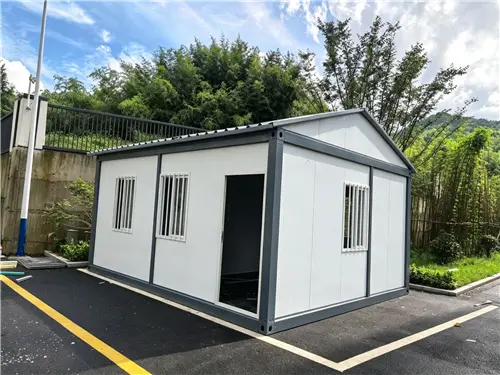
One of the main advantages of a quick-assembly container house is that much of the production work is completed before the building reaches the site.
The steel frame, wall panels, doors, windows, roof components, and other structural elements can be manufactured according to the project design in the factory. This allows dimensions, connection positions, and component quality to be checked before shipment.
Once the components arrive, the installation team mainly needs to complete positioning, alignment, connection, and bolt tightening. Compared with temporary buildings that require extensive welding and cutting on site, the installation process is easier to organize and can reduce the amount of construction work required at the project location.
For projects with tight schedules, moving more work from the construction site to the factory can make project planning more predictable.
The connection method is an important difference between modular assembly and conventional temporary construction.
The quick-assembly container house uses a bolt-connected structure, with steel columns, beams, wall panels, and other components designed around standardized connection points. Instead of relying heavily on field welding, workers can assemble the structure according to the installation sequence.
This can reduce hot-work operations and simplify the coordination between different installation teams. It also makes the installation process easier to document and inspect.
For construction managers, the benefit is not simply faster assembly. A standardized bolt connection can make it easier to establish installation procedures, check connection points, and manage work quality across multiple units.
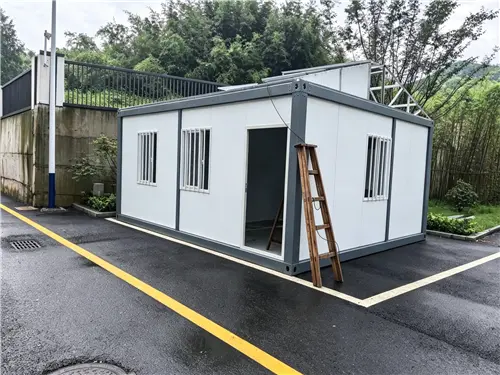
Many temporary building projects are located in environments where construction disturbance needs to be controlled.
Scenic areas, campsites, commercial streets, grasslands, and event venues may have limited tolerance for large amounts of dust, construction debris, noise, and wet construction. A modular container building can reduce many of these site operations.
The main assembly process can be carried out using a dry construction approach, avoiding extensive concrete pouring, plastering, or on-site painting for the main structure.
This does not mean that every project requires no site preparation. A suitable foundation or level, load-bearing surface and necessary utility connections still need to be prepared according to the project conditions. However, reducing wet work can make site organization simpler and cleaner.
Traditional temporary buildings may require workers with specific welding and steel fabrication skills. This can become a challenge for remote construction sites or projects where skilled labor is limited.
A modular bolt-assembly system changes the labor requirements by moving more fabrication work into the factory.
After proper technical instructions and installation training, workers can follow standardized assembly procedures, including component positioning, alignment, and bolt tightening.
For large projects involving multiple units, this standardized process can also make labor planning easier. Instead of establishing a complete fabrication operation on every site, the project team can focus primarily on assembly and installation.
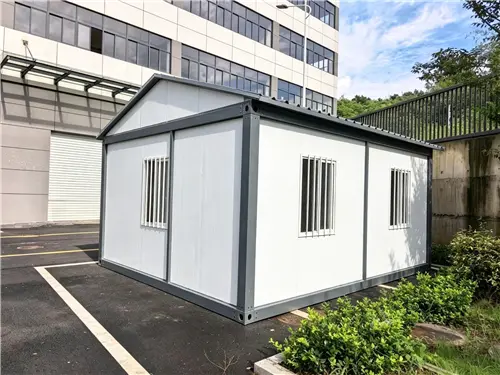
Quality control is another reason to consider a factory-made modular building.
When steel frames and building components are manufactured in a controlled production environment, manufacturers can manage dimensions, connection locations, panel installation, surface treatment, and sealing details before the products are shipped.
Suzhou Guxin combines container house manufacturing with prefabricated building technologies. Its product range includes package container houses, quick-assemble container houses, foldable container houses, modular office rooms, and other modular building products.
For buyers, factory production can help reduce inconsistencies that may occur when every temporary building is fabricated directly on site. It also provides a clearer production and inspection process before shipment.
Temporary buildings rarely have identical site conditions.
A construction project may need worker accommodation and offices, while a tourism project may require guest rooms or service spaces. A commercial project may need a temporary showroom, café, retail unit, or event facility.
Modular construction makes it easier to combine individual units according to the required floor plan. Units can be used individually or connected to create larger spaces.
For buyers who need a modular container house solution, this flexibility can be particularly useful when the project may expand or its functional requirements may change. Guxin's product range includes different container house formats designed for construction, tourism, commercial, residential, and emergency applications.
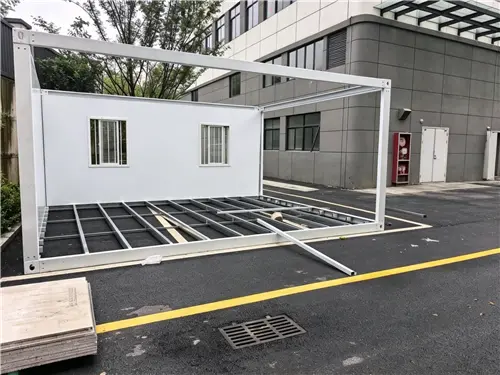
A quick installation process still requires proper site preparation.
Before delivery, the project team should confirm the ground condition, levelness, load-bearing capacity, drainage, access for transportation and lifting equipment, and utility connection points.
Compared with conventional buildings, modular steel structures can reduce the amount of foundation work required in suitable applications. Depending on the building design and local engineering requirements, units may be installed on prepared concrete foundations, hardened ground, or other suitable support systems.
The exact foundation method should always be determined according to the building load, local conditions, applicable codes, and engineering requirements.
The bolt-connected structure also provides an advantage when a temporary project needs to be relocated.
When the project is completed or the site needs to be changed, modular components can be dismantled and transported to another location for reassembly, provided the structure and components remain suitable for reuse.
This is particularly useful for construction camps, temporary offices, event facilities, and phased development projects.
Instead of treating the building as a one-time installation, project owners can consider the possibility of relocation, expansion, or reuse during the initial design stage.
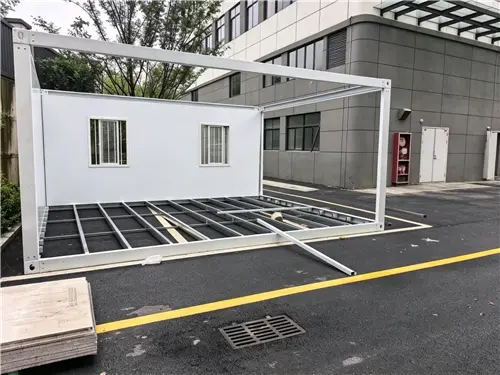
The practical applications of modular container buildings extend well beyond construction sites.
Typical applications include:
· Construction projects: Site offices, worker accommodation, meeting rooms, and project facilities
· Tourism and camping: Guest rooms, reception areas, service rooms, and campsite facilities
· Commercial projects: Pop-up stores, cafés, showrooms, and temporary retail spaces
· Public facilities: Temporary classrooms, clinics, and security checkpoints
· Emergency projects: Temporary accommodation, command centers, and relief facilities
· Industrial projects: Remote-site offices, staff accommodation, and supporting facilities
Guxin's product portfolio also covers applications such as temporary housing, holiday homes, apartment-style modular buildings, laboratories, and emergency facilities.
For overseas buyers, choosing a container house manufacturer in China involves more than comparing the appearance of different models.
The supplier needs to understand structural design, prefabrication, packaging, transportation, installation, and customization requirements. International delivery also requires coordination between production inspection, packing, logistics, and site installation.
Suzhou Guxin Steel Structure Engineering Co., Ltd. focuses on design, manufacturing, and export, with product lines covering modular container houses, fireproof rock wool insulation boards, and prefabricated color steel cladding.
Its factory-based production model allows customers to discuss dimensions, layouts, doors and windows, insulation, interior requirements, and other project-specific details before production.
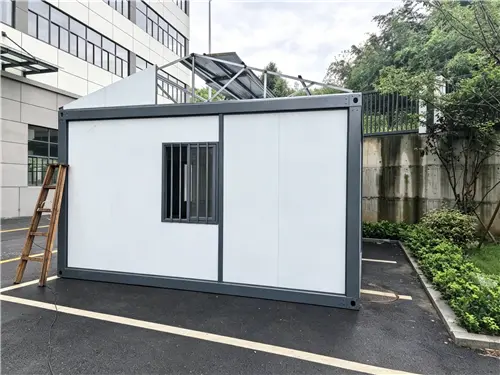
For projects where installation speed, site cleanliness, labor availability, and future relocation are important, a quick-assembly container house can provide a practical alternative to traditional temporary construction.
The key advantages come from the overall system rather than one individual feature: factory prefabrication reduces on-site fabrication, bolt assembly simplifies installation, dry construction reduces site disruption, standardized production supports quality control, and detachable components provide opportunities for relocation and reuse.
For construction companies, project contractors, tourism operators, commercial developers, and international buyers, the right solution should be selected according to the intended use, site conditions, required layout, local regulations, transportation requirements, and installation plan.
As a professional container house manufacturer and factory in China, Suzhou Guxin Steel Structure Engineering Co., Ltd. provides modular building solutions designed around different project requirements, helping customers move from building concept to factory production and on-site assembly with fewer unnecessary construction steps.